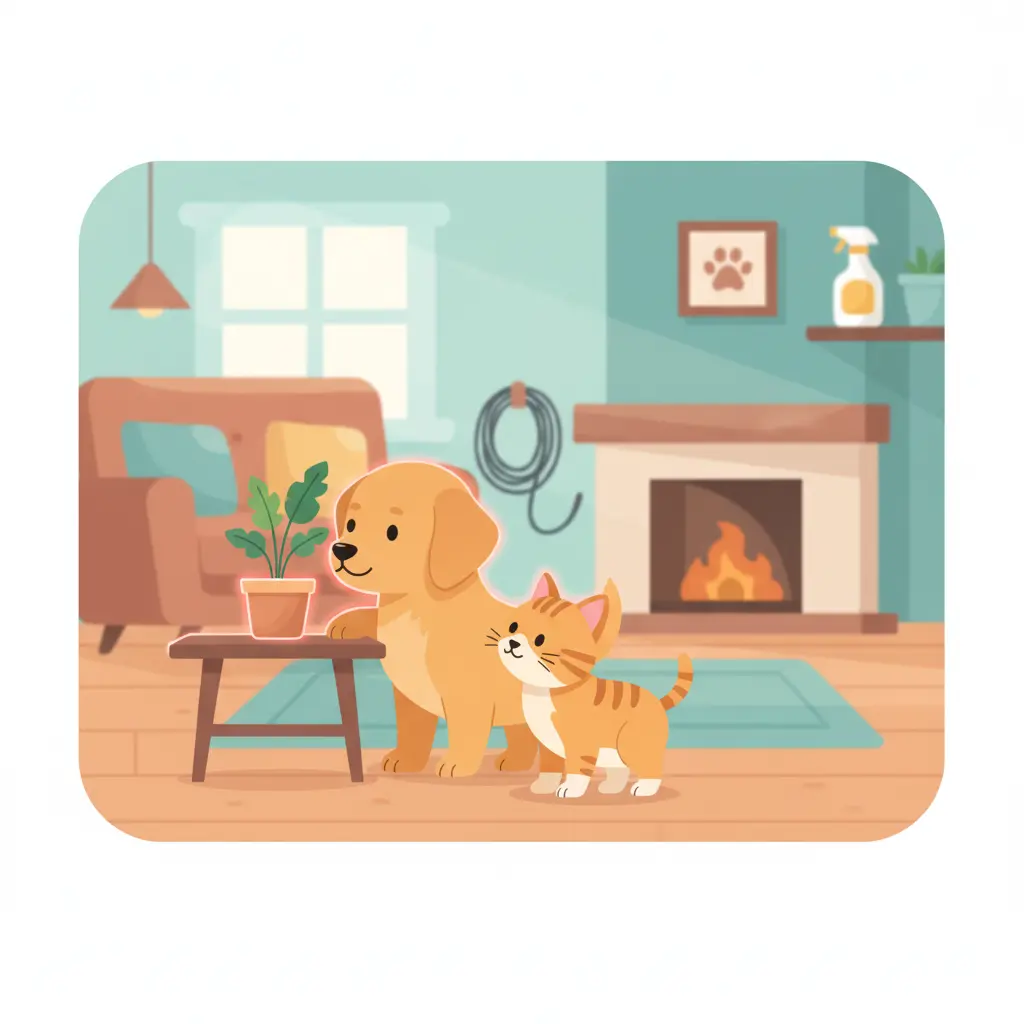
When we think of pet safety, we often imagine outdoor risks: traffic, other animals, lawns. But the truth is that many of the most common threats to our four-legged friends are right inside our homes—quiet, overlooked, and waiting until something goes wrong. At Dry Creek Veterinary Hospital, we know that awareness and early prevention are powerful. In this blog we look at the hidden hazards around your house, how to spot them, and simple changes you can make to make your home a safer place for your pet.
Common Indoor Hazards You May Not Think Of
Many pet owners are surprised to learn that their home contains numerous potential dangers. Here are some of the most common indoor hazards:
- •Household chemicals & cleaners: Many cleaning agents, air fresheners or detergents contain compounds toxic to pets when licked, inhaled or stepped upon.
- •Human foods & condiments: Even if the dog or cat only gets a nibble, foods like onion, garlic, grapes/raisins, xylitol products, alcohol, or high-fat table scraps can trigger serious illness.
- •Small objects & cords: It might be tempting for a curious kitten or puppy to chew electrical cords, swallow buttons, rubber bands or string. Internal obstruction or shock are real risks.
- •Indoor plants: Some popular houseplants (e.g., lilies, philodendron, aloe) are toxic to cats or dogs when ingested.
- •Hidden heat or cold spots: Pets may seek warm zones (near space heaters, radiators) or cool zones (hard tile floors) that have potential hazards (overheating, burns, chilling).
- •Furniture & accessibility issues: Older pets especially can struggle with high jumps or slippery surfaces; the result might be falls, sprains or fractures.
How to Audit Your Home in 15 Minutes
A quick home safety audit can help you identify and address potential hazards before they become problems. Here's how to do it:
- •Walk through each room with your pet at their height (kneel down) and ask: "Could they reach this, chew this, knock this over?"
- •Identify and label potential danger zones—kitchen, laundry room, garage, plant shelf, cords behind sofas.
- •Create a quick 'safe pet zone' checklist: e.g., Cords secured? Toxic plants removed? Accessible water and litter? No small ingestible items on the floor?
- •Set one small change per week (e.g., cover wires, move chemicals up high, replace toxic plants). Over a month, you'll significantly reduce risk.
Age & Breed-Specific Concerns
Different life stages and breeds have unique safety considerations:
- •Puppies & kittens: Curious chewers, climbers; need floor-level hazard control, secure cabinets and closed laundry doors.
- •Adult dogs/cats with access to outdoors: Returning inside often bring in additional risks (pesticides, shed plants, wild animal bits).
- •Senior pets: Mobility issues + slippery floors = higher fall risk. Use rugs, ramps, avoid letting them jump from couches to floors if possible. Also ensure water and food bowls are easily accessible.
Partnering With Your Vet for Home Safety
At Dry Creek Veterinary Hospital, we believe pet safety isn't just about vaccines and surgery—it's about setting up your home and lifestyle for success.
- •During wellness visits we can—and often do—ask: "What does your pet's home environment look like?" and provide customized advice.
- •If your pet experiences recurring issues (vomiting, chewing non-food items, slips/falls) we can examine the role of the home environment in the problem.
- •We can recommend environmental enrichment tools—safe chew toys, elevated feeding stations, anti-slip mats—that support safer living.
Final Thought: Your home should be your pet's safe sanctuary. With just a few thoughtful tweaks, you can significantly reduce daily risk and promote peace of mind. If you'd like a free "Home Safety Check" conversation or your pet is acting out (chewing cords, frequent vomiting, suddenly avoiding old favourite spots) call us at (209)-745-9130 to schedule a consultation at Dry Creek Veterinary Hospital. Let's make your space as safe as your love for them.